DigiPen Outbreak - Season 5 | 2013
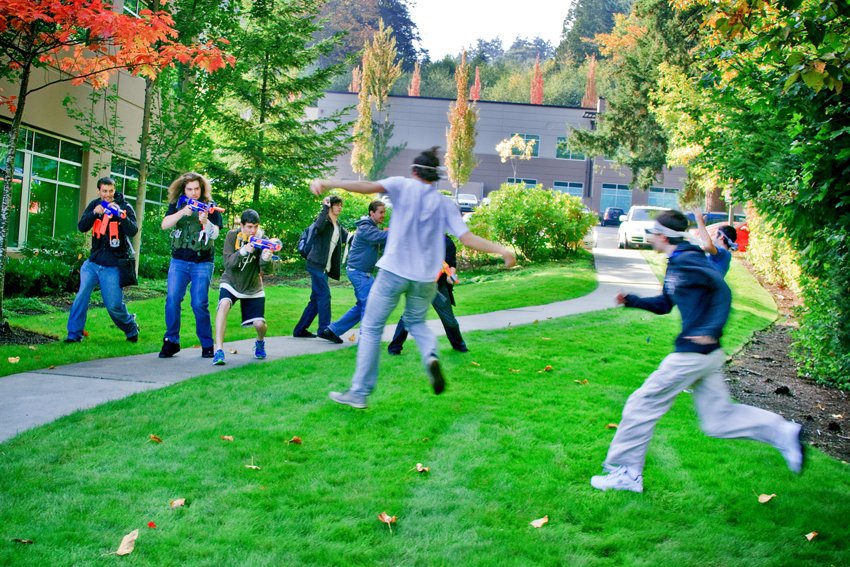
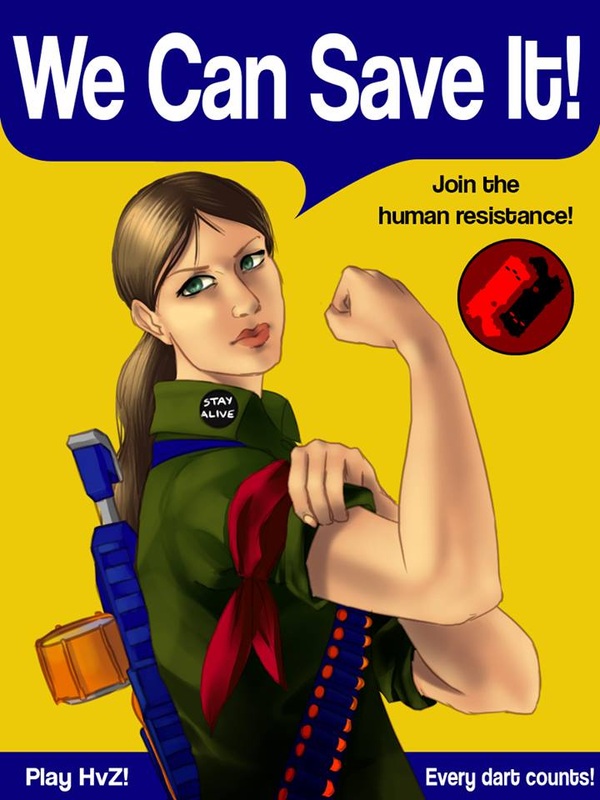
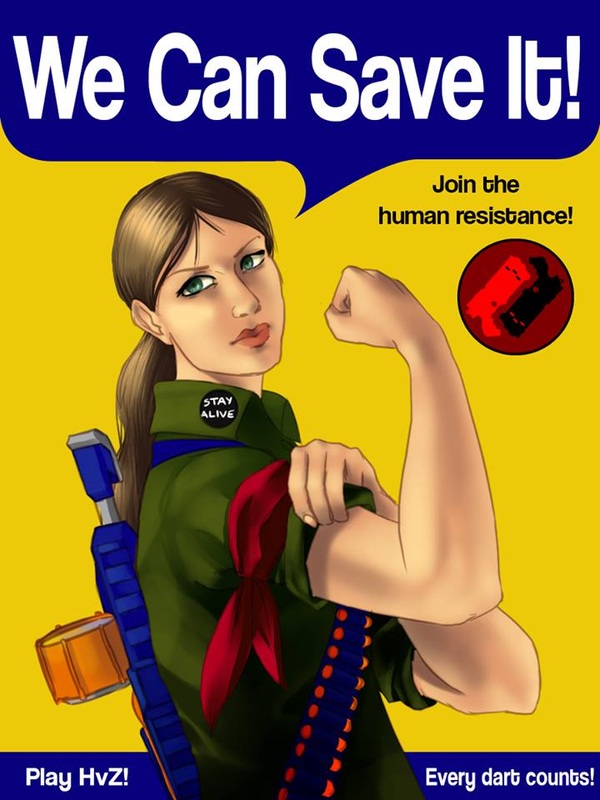
This year also featured the new game Outbreak Portable! Players are assigned roles as humans and zombies like regular outbreak, but instead of humans defending themselves with guns they used nerf dart cards instead. The game was designed to promote the season itself as well as help people meet each other during Freshman Orientation, during which we hosted it. Post Mortem:
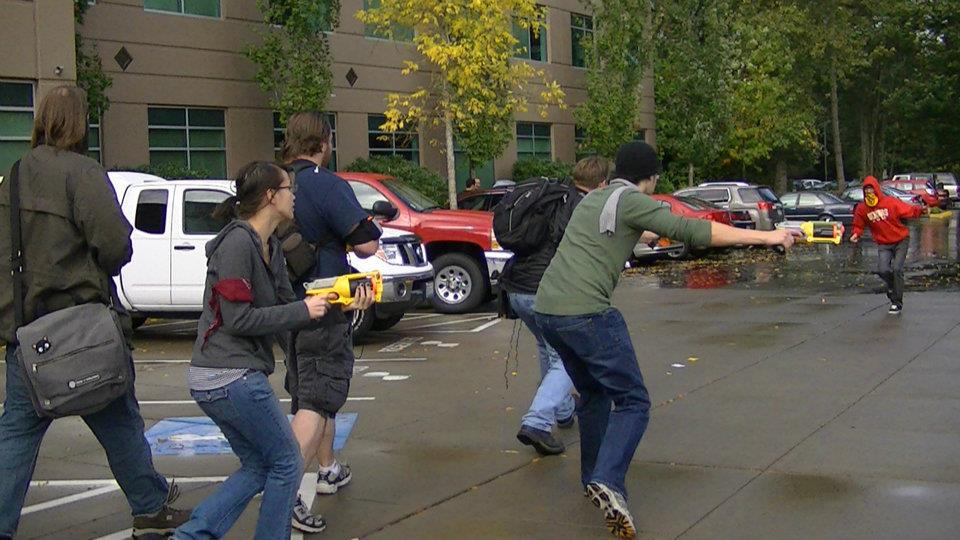
There were a lot of things I wanted to fix with Outbreak. Over my years of playing it there was a pretty obvious trend in how the game was played. Humans would bundle up into phalanxes that were slow moving and nigh impenetrable except by huge clouds of zombies that were disorganized and caused a lot of deaths by simply confusing a player as to who's in the game or not, a very not fun way to die. Certain common mission types were both heavily in favor of one of the teams and rather boring (IE 'defend this point for 15 minutes' - a mission type strongly favored to humans and requires very little engagement), and for veterans of the game a lot of the missions had become stale and repetitive. We really wanted to spice things up.
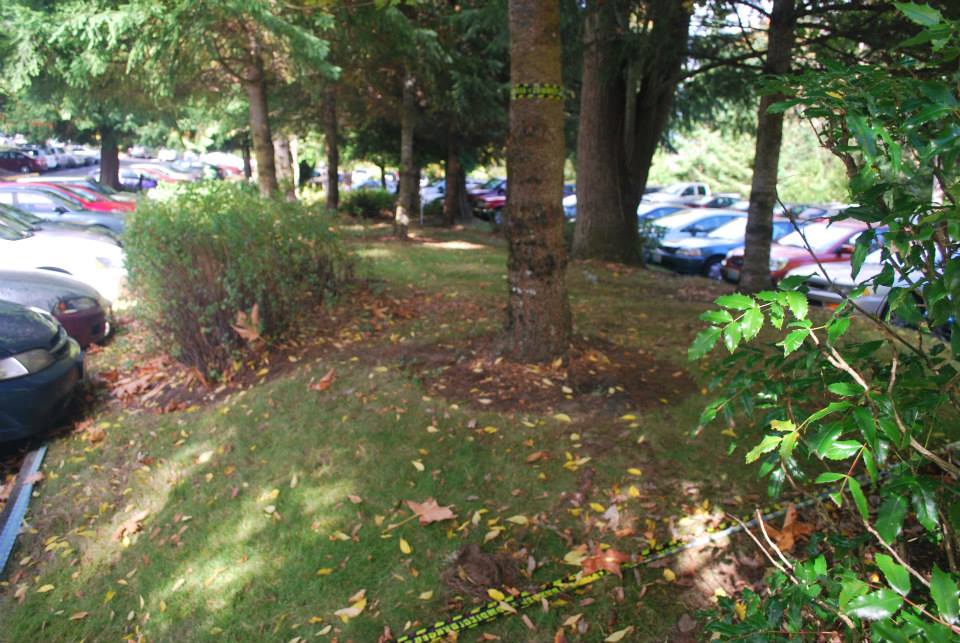
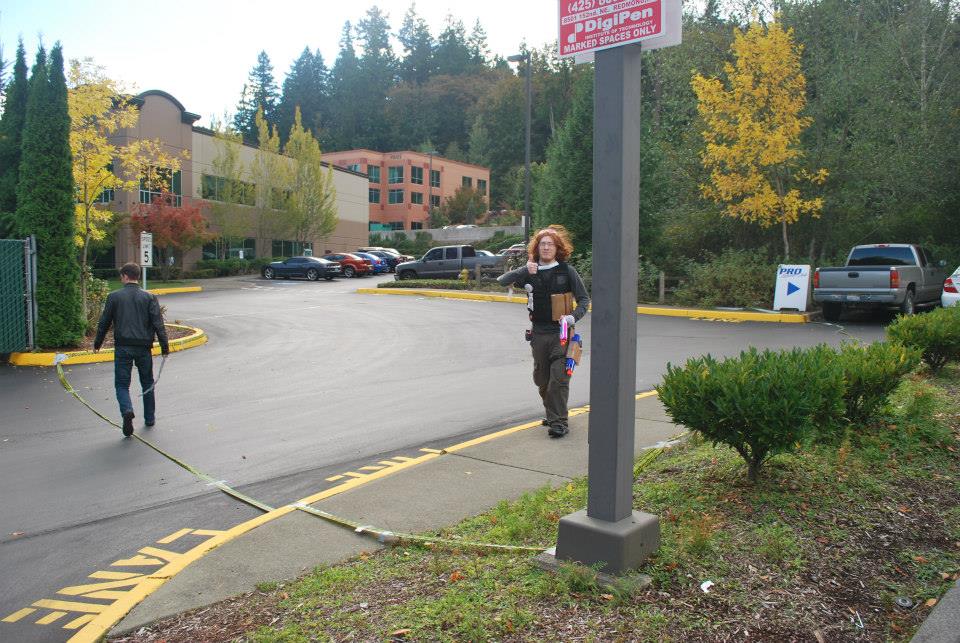
It just so happened that for season 5, the company that had been in the building next to us moved out. This gave us a unique opportunity to use their empty parking lot (after the landlord company gave their permission) and allowed for some really unique mission types. The most popular was during the Wednesday mission, we got a bunch of old chair boxes and had the humans build a box fort - a standing safe zone for humans that persisted through the rest of the week. We could have never had a standing structure like that in the DigiPen lot. Every mission had a verb associated with it: Recon, Delivery, Construction, Retrieval, and Run. Each mission was tailored to fit it's verb in a new way. For example, the Monday mission, Recon, had players locating supply boxes hidden through the campus that had a label indicating how many students of what degree program could carry them back to their base. Not only did it encourage humans to go out in small groups, but it made sure members of different degree programs had to work together as well, encouraging new friendships. We also implemented a host of new factors: Irradiated Zones that humans couldn't pass through without the proper equipment, and Walking Zombies that were unkillable but could only walk and couldn't enter Irradiated zones. Both these features were meant to fight Phalanx combat - where humans group together in a huge mass - and worked to an extent. While Irradiated zones were ultimately a hindrance to the game with their limited use to both teams and added complexity, walking zombies were an absolute success. By far and away Reversion was the biggest change we made to the mechanics of the game, however, and ultimately I'm glad we went with it. It kept people engaged and kept the intensity curve of the game right were we wanted it for the majority of the week. Reversion did have it's share of drawbacks though. One of the biggest was surprisingly the end of the 'zombie brotherhood'. In previous seasons of Outbreak, there was this mentality among the zombies similar to that of a family - once a zombie, always a zombie, and the more the better. While it seems minor at first, it was a huge part of how the zombies played the game, made new friends and interacted with each other in general. With reversion, many players saw the zombie team as a stop on the road: with so many temporary zombies, that brotherhood began to dwindle to just the core zombie players of previous seasons. This also led to a weakening of the Zombie leadership. When you don't know who will be on your team any given day, lasting squad formations and stable leadership are bound to take a hit. Over the years, Outbreak has become something of a tradition, and even his it's own little mythos. Though the theme of a given season changes every year - Nuclear radiation zombies, zombies caused by viruses, vodoo zombies, etc - some aspects of the game never change. 'Telepathic' zombies (AKA zombies with cell phones), someone jesting "Oh shit they learned how to drive!", the legend of the Tricycle Zombie: these are all very real aspects of the culture of Outbreak that lives from season to season. I was so glad to be part of the Outbreak team this year. Outbreak is how I met my closest friends at DigiPen, and is responsible for some of my fondest memories while there. As a Senior who's been with the game since day one it was an honor to add my name to the list of the students that have championed the game through the years - and I can't wait to see what our successors have in store once the torch has been passed. |
Outbreak Official Trailer:
Responsibilities:
-Led and organized Design meetings
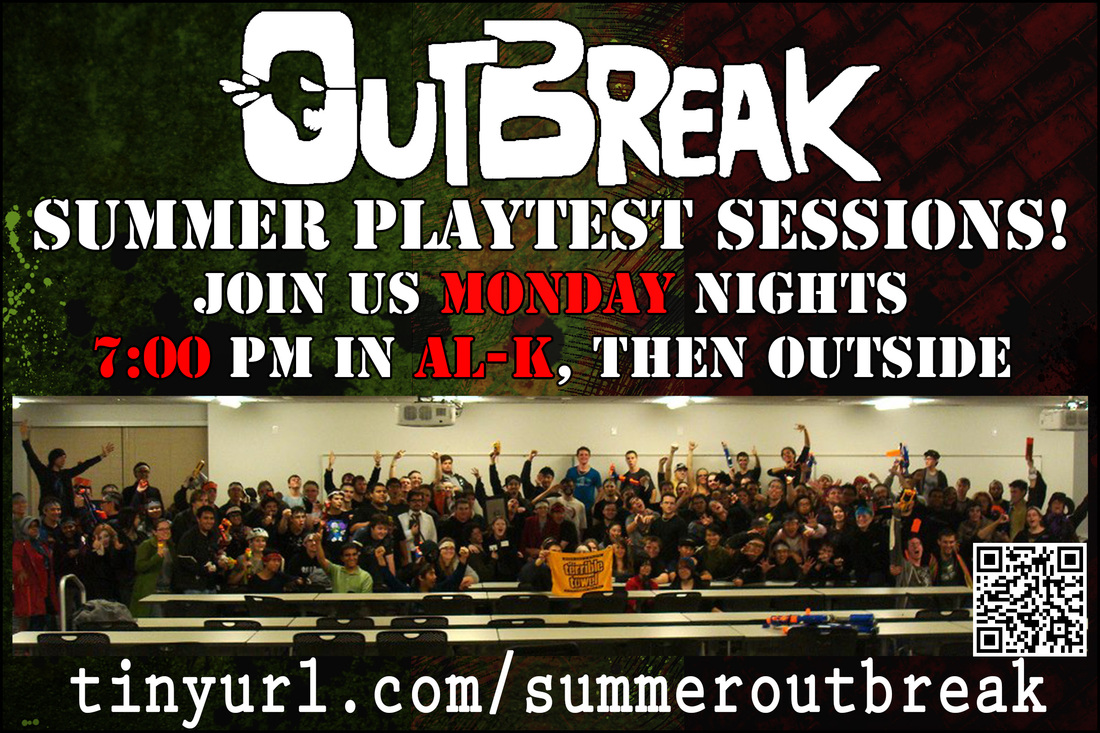
-Playtested weekly over the summer -Acquisition, construction, and placing of game props and mission objectives -Game area design, prop placement design, general gameplay design -Moderated game, answered questions, etc. Media:
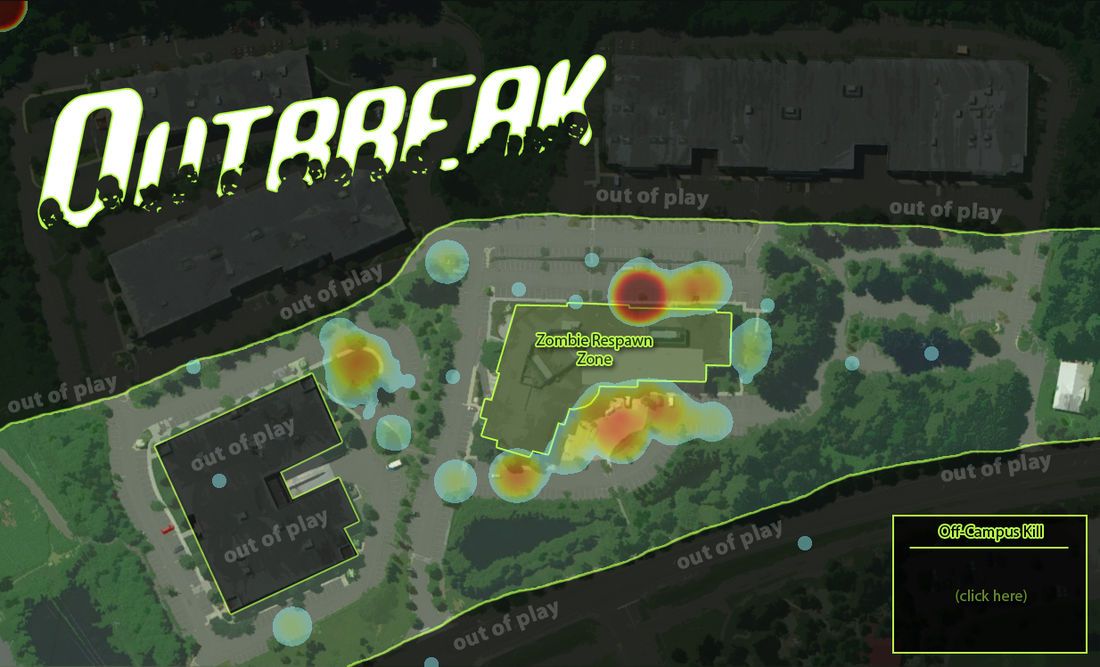
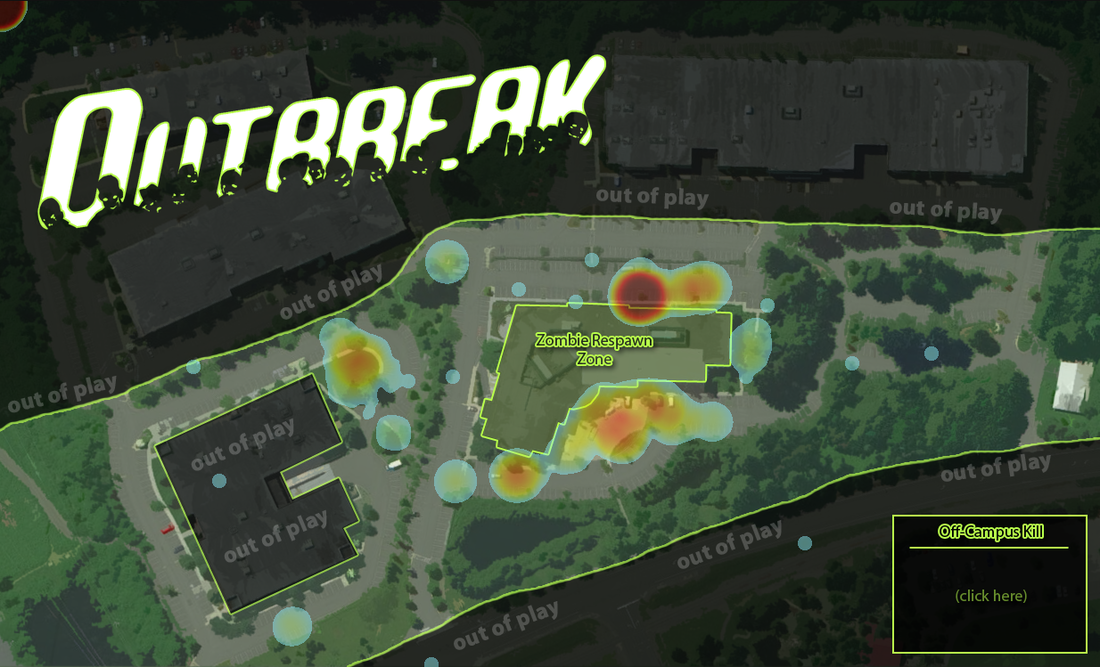
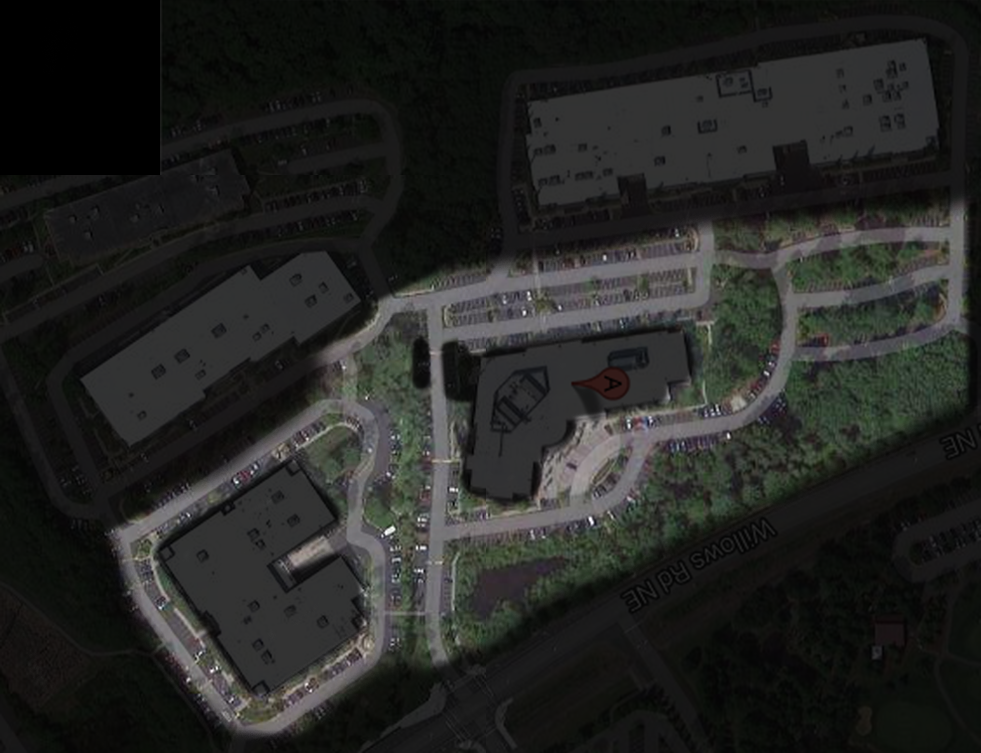
A heat map displaying where humans died the most.
|